
An energy company in Germany operates an onshore wind farm with several dozen turbines. Gearbox and generator failures resulted in downtime, costly emergency repairs, and crane calls during adverse weather. Bitechsis developed a predictive maintenance system that collects data from turbines, analyzes the condition of key components, and helps plan maintenance. The Client reduced unplanned downtime and lowered maintenance costs without replacing the existing SCADA system.
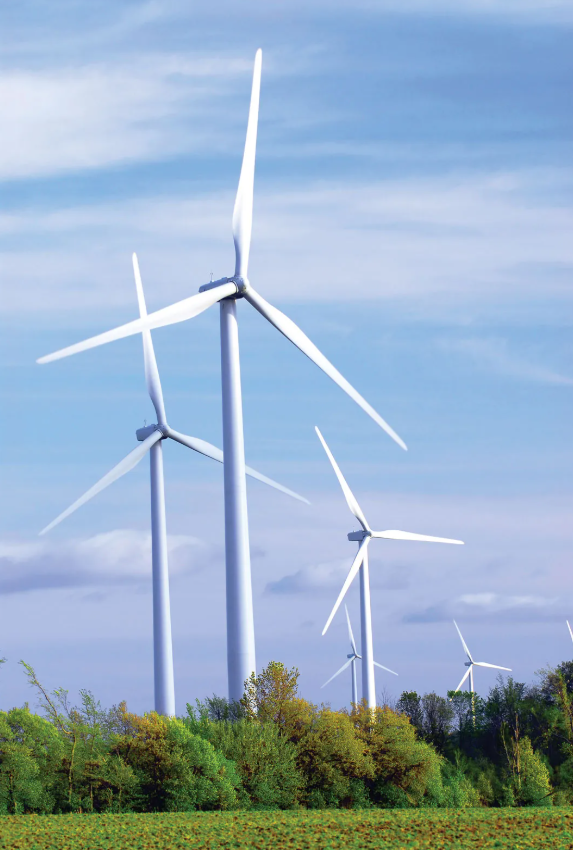
A leading renewable energy company in Germany operates a large-scale onshore wind farm consisting of several dozen turbines distributed across remote and weather-exposed locations. The operator faced recurring failures in critical components such as gearboxes and generators, leading to unplanned shutdowns, expensive emergency repairs, and frequent crane mobilizations—often under challenging weather conditions.
Bitechsis designed and implemented an advanced IoT- and machine-learning–driven predictive maintenance platform that continuously collects operational data from turbines, analyzes the health of key components, and forecasts potential failures before they occur. The solution integrates seamlessly with the client’s existing SCADA infrastructure, eliminating the need for hardware replacement while adding a powerful analytics and decision-support layer.
As a result, the client achieved a significant reduction in unplanned downtime, improved maintenance planning accuracy, extended asset lifespan, and lowered overall maintenance and operational costs—transforming maintenance from a reactive process into a proactive, data-driven strategy.
Business сhallenge
The Client needed to maintain their wind farm’s high availability while keeping maintenance costs under control. The turbines are located over a large area and are not always accessible. Replacing components in the nacelle requires a crane and a dedicated crew.
The company used scheduled maintenance based on turbine operating hours and basic SCADA alarms. Damage was often detected only after the turbine had entered emergency mode. The gearbox or generator had to be replaced within a short timeframe. This led to long downtimes and increased repair costs.
Additional requirements:
- use the existing SCADA system and communication network,
- do not replace turbine controllers and sensors unless necessary,
- account for unstable communication on the part of the site,
- provide a simple interface for operations and maintenance planning engineers.

Our solution
Working with the Client’s engineers, we developed a predictive maintenance system that operates on top of the current infrastructure. We identified a set of critical components and parameters, integrated data from existing vibration and temperature sensors, and added missing data points.
Data from the turbines is transmitted via IoT gateways to the cloud platform. We implemented data ingestion, cleaning, and normalization for all turbines. The analytics module operates on this layer. It utilizes machine learning models and anomaly detection algorithms. They generate a baseline profile of component performance under different wind and load conditions and monitor for deviations that indicate wear.